What is there to see in the Neues Museum in Berlin?
Three collections, one building
The description calls the Neues Museum “three museums in one,” and for once that's not just marketing talk. Under one roof lie side by side the Egyptian Museum and Papyrus Collection, the Museum of Prehistory and Early History and parts of the Antiquities Collection. Anyone arriving with one expectation in mind — usually the bust of Nefertiti — ends up walking through two more collections they didn't count on. That's why most visitors stay longer than planned; how much time is realistic is covered under how much time you need.
The building is part of the exhibition
Friedrich August Stüler built the building between 1843 and 1855; it is considered an outstanding document of 19th-century museum architecture. It was severely damaged in the Second World War and stood as a ruin for decades afterward. Reconstruction was planned starting in 1985, the British architect David Chipperfield led the restoration from 1997, and it reopened in 2009. What matters is how this was done: the visible war damage was left in place instead of being painted over, and the lost rooms were filled in with plain new material. You see most of this in the staircase hall — of the Kaulbach frescoes, painted there by leading Berlin classicists, only traces remain. Battaz from France sums it up on August 4, 2026: truly magnificent, both the architecture and the exhibits.
The Egyptian Collection
The most famous piece stands in the North Dome Room on the second floor, in a room of its own: the Bust of Nefertiti, internationally known as Nefertiti. It is made of limestone with a painted stucco surface and dates from the Amarna period under Akhenaten, roughly 1353 to 1336 BC. Photography is prohibited in this room; the details are covered under Photography in the Neues Museum.
The second head worth seeing is the Berlin Green Head — noticeably smaller, far less photographed, and for many visitors the piece that stays with them longer. Add to that coffins and sarcophagi, papyri and mummies. Paolo from Italy writes on August 22, 2026, that the Egyptian collection is especially beautiful, above all the bust of Nefertiti.
Prehistory and Early History: the part no one expects
This collection covers prehistoric cultures from the Near East to the Atlantic and from North Africa to Scandinavia. The pieces people stop at:
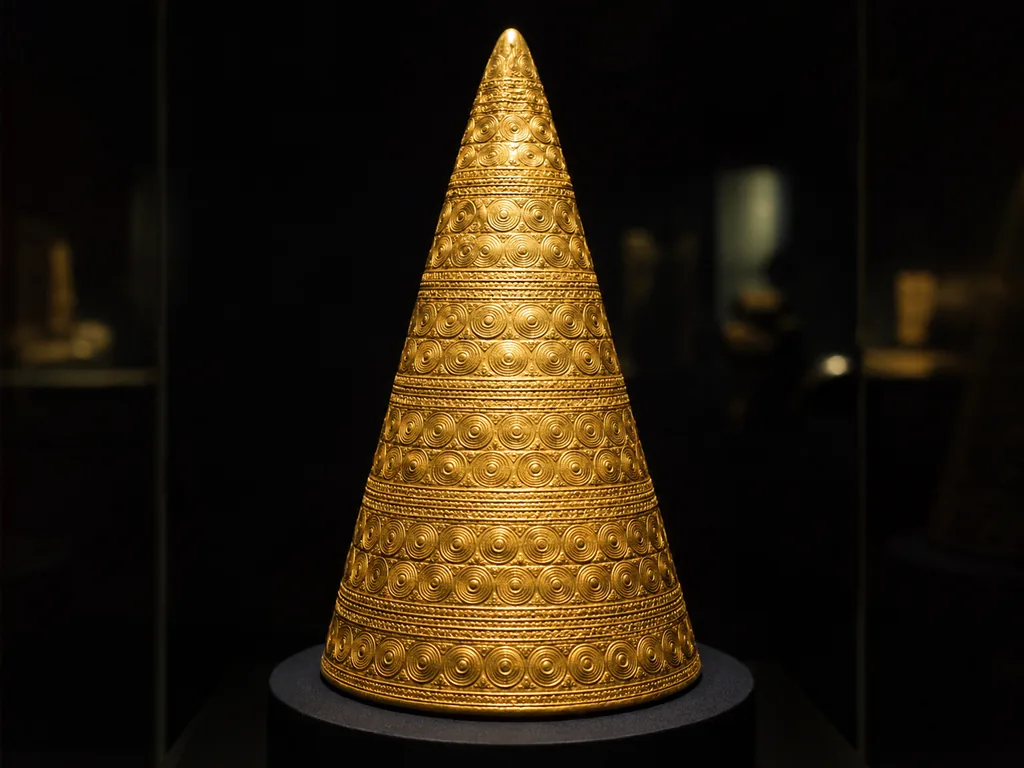
- The Berlin Gold Hat, a Bronze Age gold cone, covered from top to bottom with bands of circular ornaments.
- The “Priam's Treasure”, the Troy finds associated with Schliemann.
- The Kerch crown, a 5th-century diadem set with garnets.
- The Neupotz Barbarian Treasure.
- A Neanderthal skull — the piece children reliably stop in front of.
From the Antiquities Collection
Parts of the Antiquities Collection are housed here, including the Xanten Boy, a bronze, and a Roman Heliosstatue. They sit rather unobtrusively along the route, and that's exactly why you discover them.
Go upstairs to Nefertiti first, then work your way down. The North Dome Room is emptiest in the morning and fills up over the course of the day, while the ground floor doesn't to the same extent.
A route that works
Enter via the James-Simon-Galerie, go straight up to the second floor for the North Dome Room, then back down through the Egyptian halls with the Green Head, sarcophagi and papyri, then down through the staircase hall to Prehistory and Early History for the Gold Hat, the Troy finds and the Neanderthal skull. If you still have energy left, head to the Altes Museum or the Alte Nationalgalerie next door — for that, though, you'll need the day pass, see Admission and Tickets and the Museum Island Comparison.
Frequently asked questions
What is there to see in the Neues Museum in Berlin?
Three collections: the Egyptian Museum and Papyrus Collection with the bust of Nefertiti, the Museum of Prehistory and Early History with the Gold Hat, the Troy finds and the Neanderthal skull, as well as parts of the Antiquities Collection.
Where is the Berlin Gold Hat located?
In the Neues Museum, in the Prehistory and Early History department. The Bronze Age gold cone is covered with bands of circular ornaments and is one of the pieces that almost everyone stops at.
Is Priam's Treasure in the Neues Museum?
The Troy finds associated with Schliemann belong to the Museum of Prehistory and Early History and can be seen here. How long you'll need for that is covered under how much time you need.
Can you take photos in the Neues Museum?
Mostly yes, but not in the North Dome Room. The rules are covered under Photography in the Neues Museum.
Why does the building look partly unfinished?
Because that's intentional. During the reconstruction under David Chipperfield, the visible war damage was left in place, and lost rooms were filled in with plain new material. It reopened in 2009.